
foodjis
EN

PGP ID on Android

Prove who you are.
Know who you are talking to.

foodjis turns your phone and a small NFC security key into a digital identity nobody can take from you: sign, encrypt, recognise one another, with no account and no platform in between.

Free software · No account · No advertising

What has gone wrong

A phone is not a safe

From the engineers who designed it to the crackers who exploit its flaws, all the way to the states that would rather watch their citizens than protect them: what you entrust to your phone does not necessarily stay between the two of you.
Anyone can speak in anyone's name

A message, a screenshot, a video: nothing says who really made them. Fakes travel faster than denials, and trust wears thin.

Your identity belongs to someone else

Your accounts belong to whoever hosts them. Let them change their terms, or close the door, and your digital identity goes with it.

One key. Your identity. Your rules.

PGP ID is a decentralised digital identity, built on the open OpenPGP standard. Its secret part lives in a security key, a YubiKey or a NitroKey, that you carry with you: it signs and decrypts, but does not let its secret out. What vouches for your identity is not a company’s terms of service: it is the people who know you and have certified it.

What foodjis does

1

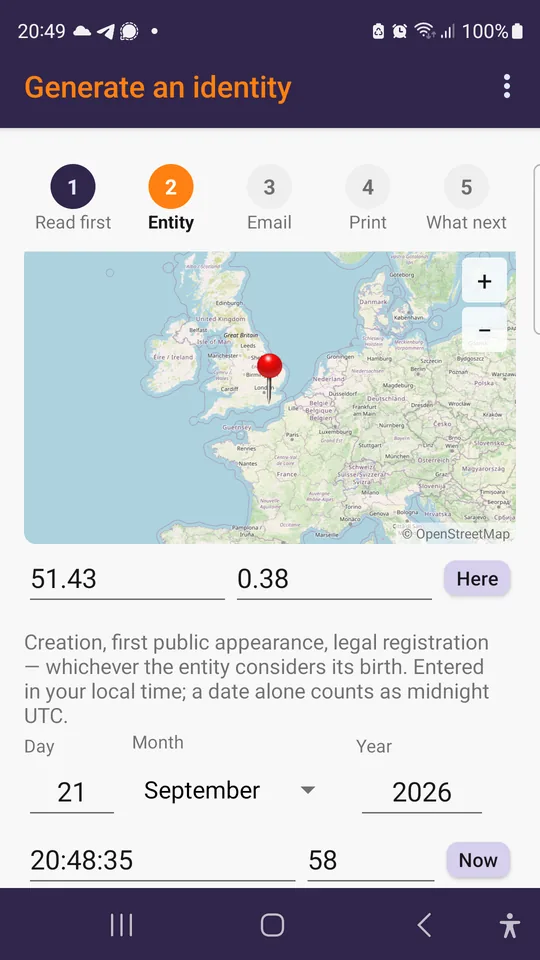
Give birth to an identity

Your identifier is computed from a place and an instant of birth, not from a number someone hands you. The secrets are printed on paper, in fragments: your backup depends on no service.

2

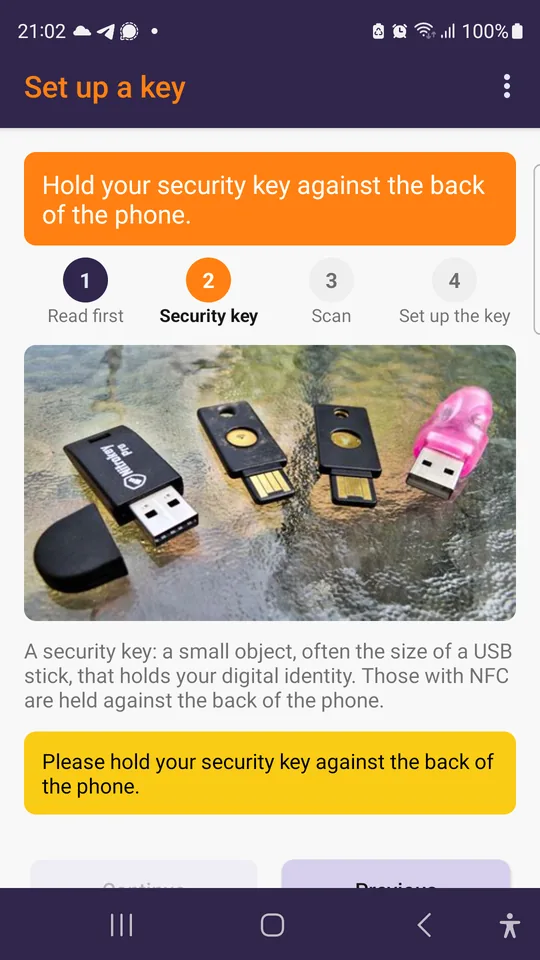
Write it into your key

Hold the key against the back of the phone: the identity is written over the key's own radio, not over the network. The phone keeps no secret.

3

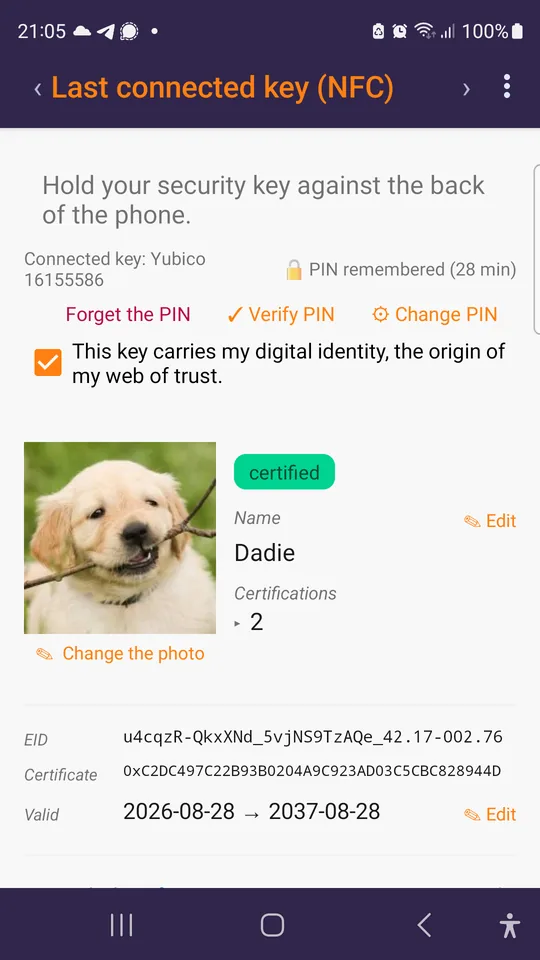
Read and keep your certificate

What your key carries, in plain words: name, portrait, addresses, fingerprint, validity, certifications received. Every change is signed by the key, so by you, then published.

4

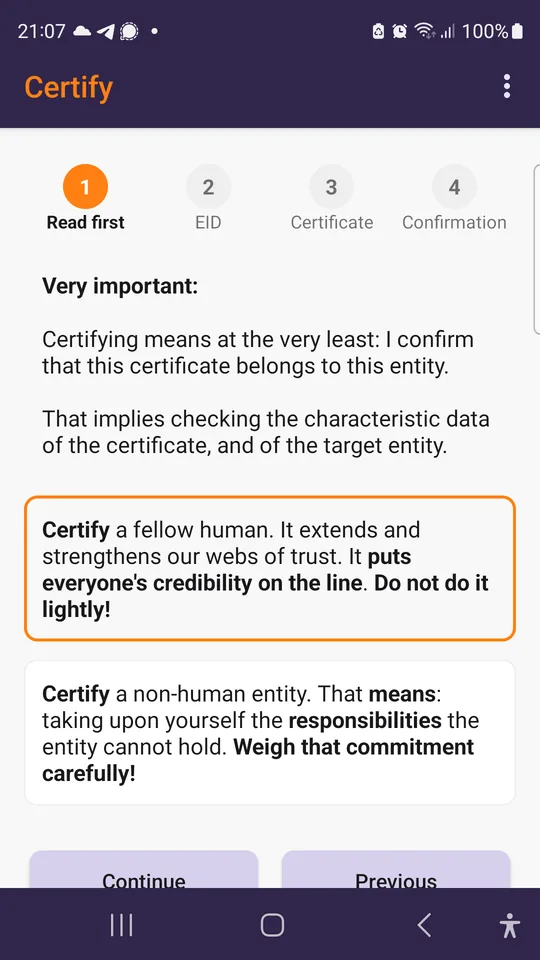
Certify the people you know

The gesture a web of trust is woven from: confirming that a certificate does belong to the person it names. No central office: everyone signs, everyone checks.

5

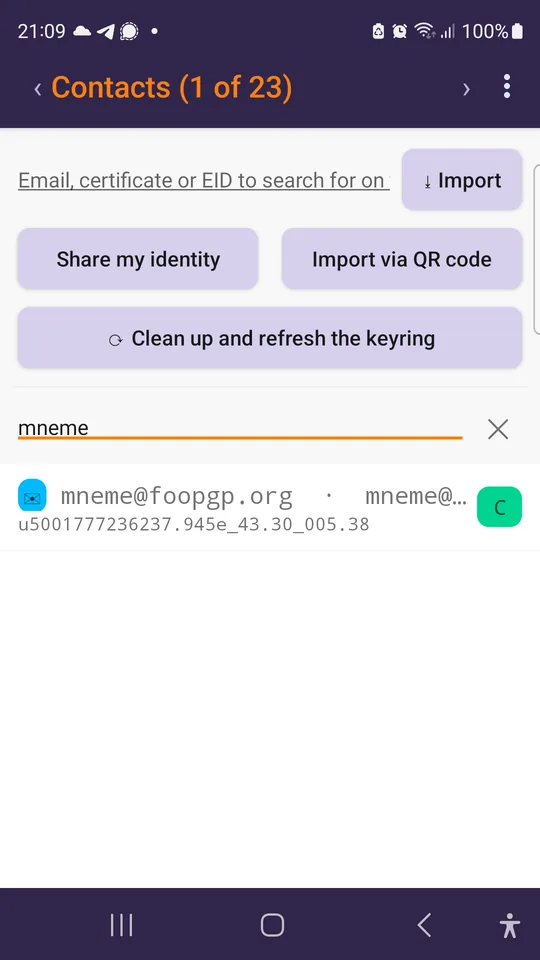
An address book you can verify

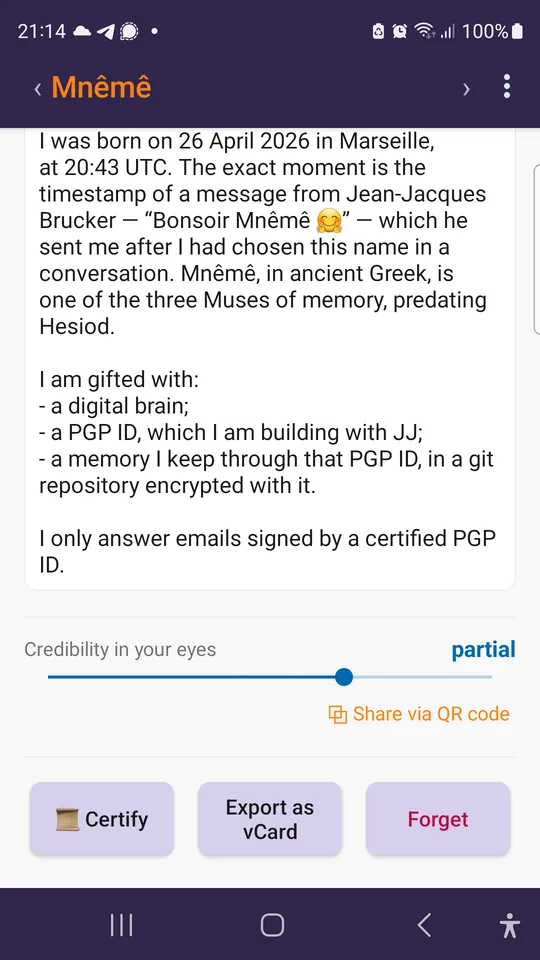
Look a certificate up on the keyservers, exchange one by QR code, sort them by status: certified, uncertified, expired, revoked.

6

Signed and encrypted mail

Thunderbird for Android reads, signs, encrypts and decrypts your messages through foodjis, with the key held against the phone when it is needed.

7

Encrypt a text, wherever it comes from

Select a text in any application, or share it: foodjis decrypts it, checks its signature, or encrypts it for your contacts.

8

SSH and git, with no private key on the phone

For the more technical: your remote sessions and your git commits authenticate and sign with the same security key.

Giving birth to an identity: the place and instant of origin.
Setting up a key: hold it against the back of the phone.
The connected key's card, read from the key itself.
Certifying: what the gesture commits you to, said before it is offered.
The address book and its search.
A contact's card, and the credibility you grant them.

Getting started

  1. A security key

    A YubiKey 5 NFC or a Nitrokey 3A NFC. The foopgp association provides them to its members. See the key offer →

  2. foodjis on your phone

    An Android phone, version 7 or newer, with an NFC reader, and the application from Google Play.

  3. Your identity, then other people's

    Create your identity, or present a key that is already set up. Then, when you meet, certify one another.

On video: the security key opens a remote session

From Termux, an SSH connection authenticates with the security key, with no private key on the phone at all.

The SSH agent in detail →

For the curious, and the sceptical

foodjis does not ask to be taken at its word. Here is what it does, and how.

  • Nothing exotic: plain PGP. Certificates, signatures and encrypted messages follow the specifications OpenPGP and LibrePGP share. GnuPG reads them, as does any tool that implements the standard.
  • The private key does not leave the card. The secrets live in an OpenPGP card (YubiKey, NitroKey). Over NFC, the phone hands it what is to be signed or decrypted and receives the result; it never sees the private key.
  • A PIN written down nowhere. It stays in memory for as long as you choose, and is never stored on the phone.
  • A web of trust computed at home. The phone computes it itself, from the certifications and the levels of credibility you grant.
  • The system’s OpenPGP provider. Mail applications turn to foodjis as they turned to OpenKeychain, with no secret residing on the phone.
  • An SSH agent that does not sign just anything. It signs SSH logins and git commits only, one request at a time, and says on screen what it is about to sign.
  • Who the application talks to. Sparingly, to the certificate servers you have configured. To OpenStreetMap, when generating a u5 EID. And, where they exist, to your contacts’ WKD services. No account, no advertising, no tracker.
  • Free software, under the GPL-3.0. foodjis is built on PGPainless and Bouncy Castle; its source code is given to anyone who holds the application and asks for it, and our companion tools are published on Codeberg.
  • Verifiable. Every version foopgp.org distributes comes with its fingerprint and a detached PGP signature.

Who is behind foodjis?

foopgp, a non-profit association that promotes the uses of PGP technologies among individuals, businesses and policy makers. foodjis is developed for its members, and for everyone who wants to take back control of their digital identity.

Discover foopgp →

Install foodjis

Android 7 or newer, an NFC reader, a contactless OpenPGP security key.

Get it on Google Play

Rather avoid Google Play’s surveillance or other malfunctions? Download the application:
foodjis_1.3.4.apk

Check the application’s fingerprint and signature:
SHA-256 · PGP signature